Adivasi Divas 2026: History, Tribal Culture, Languages, Maharashtra & Wishes
Know why Adivasi Divas is celebrated on 9 August, tribal culture, languages, Maharashtra tribes, schemes, education, jobs and wishes.
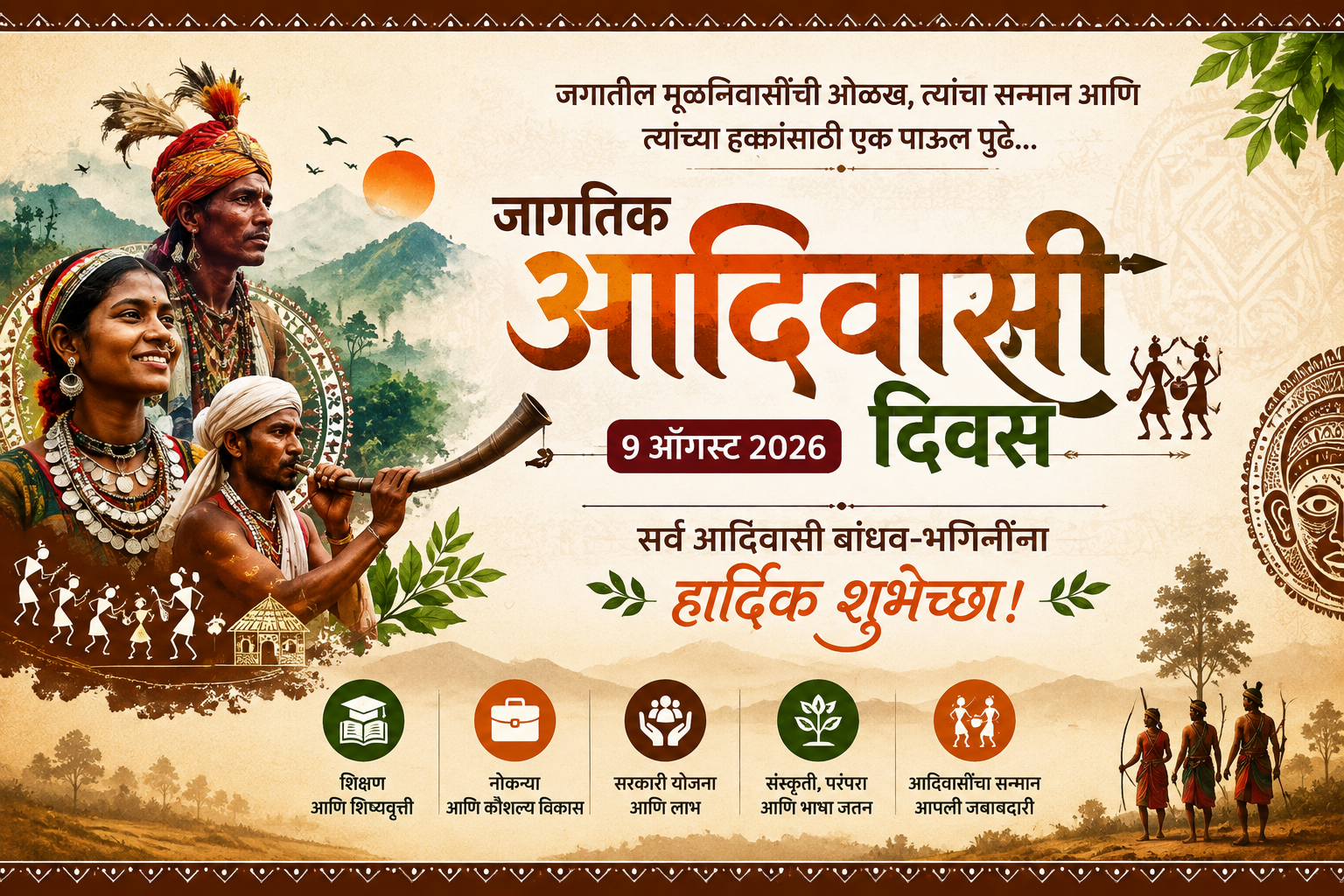
World Tribal Day 2026: Adivasi Din on 9 August, Culture, Languages, Regions and Importance
World Tribal Day 2026, also known as Adivasi Din, is observed on 9 August every year. The official United Nations observance is the International Day of the World's Indigenous Peoples. The day recognizes the culture, traditions, languages, knowledge and rights of Indigenous and tribal communities around the world.
In India, Adivasi Din is an opportunity to understand and celebrate the country's rich tribal heritage while also highlighting opportunities in education, jobs, government schemes, skills and development.
Why is Adivasi Din celebrated on 9 August?
The United Nations observes 9 August because the first meeting of the UN Working Group on Indigenous Populations was held on this date in 1982. The day later became an annual international observance to create awareness about Indigenous Peoples and their rights, cultures and contributions.
The 2026 theme is “Honouring Indigenous Midwives: Safeguarding Life and Well-being.” It highlights the importance of indigenous knowledge, particularly traditional knowledge related to healthcare and childbirth.
Adivasi communities in India
India has a large and diverse tribal population spread across many parts of the country. Tribal communities are officially recognized as Scheduled Tribes (STs) under the Constitution.
Some well-known tribal communities include Bhil, Gond, Warli, Santhal, Munda, Oraon, Khasi, Garo, Naga, Korku, Kokna, Katkari and Mahadeo Koli, among many others.
These communities are not culturally identical. Each has its own traditions, customs, festivals, food, clothing, art forms and languages.
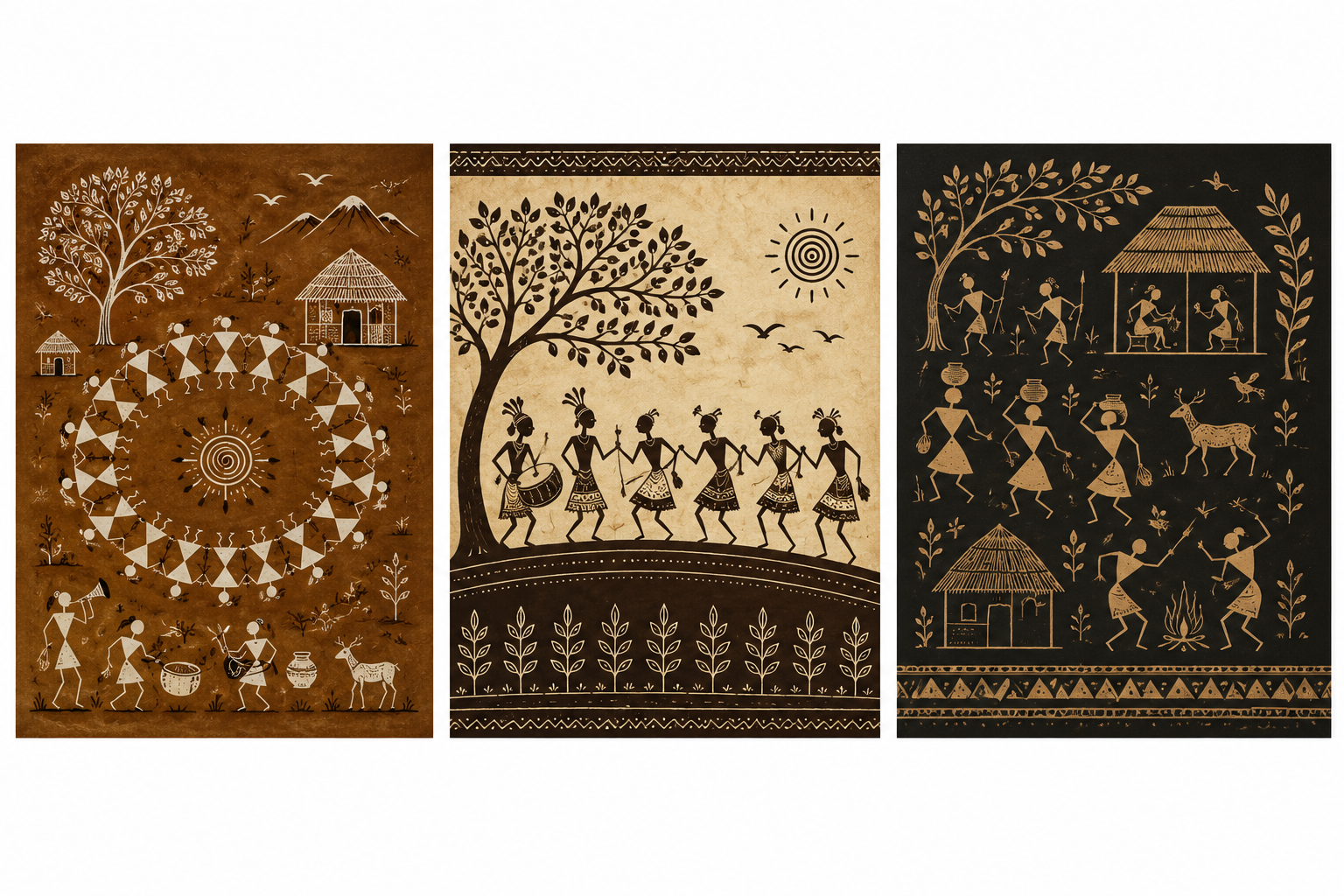
Tribal communities in Maharashtra
Maharashtra has a particularly rich tribal heritage. The state has 45 Scheduled Tribes, including communities such as Bhil, Gond, Mahadeo Koli, Pawara, Thakur and Warli.
Tribal communities are particularly prominent in districts and regions including Nandurbar, Dhule, Nashik, Palghar, Thane, Jalgaon, Gadchiroli, Chandrapur, Gondia, Bhandara, Yavatmal and parts of Vidarbha.
Maharashtra's tribal heritage includes Warli painting, folk songs, traditional dances, handicrafts, festivals and generations of knowledge about forests, agriculture and nature.
Tribal festivals and traditions in Nashik
The tribal areas of Nashik district have their own distinctive festivals and traditions. Among the best-known is the Dongrya Dev (डोंगऱ्या देव) festival, also referred to as Bhaya in some tribal communities.
Dongrya Dev is traditionally associated with tribal communities in areas such as Surgana, Peth, Trimbakeshwar and Kalwan. The festival is connected with worship of the mountain and nature and is celebrated with community participation, traditional songs and dance.
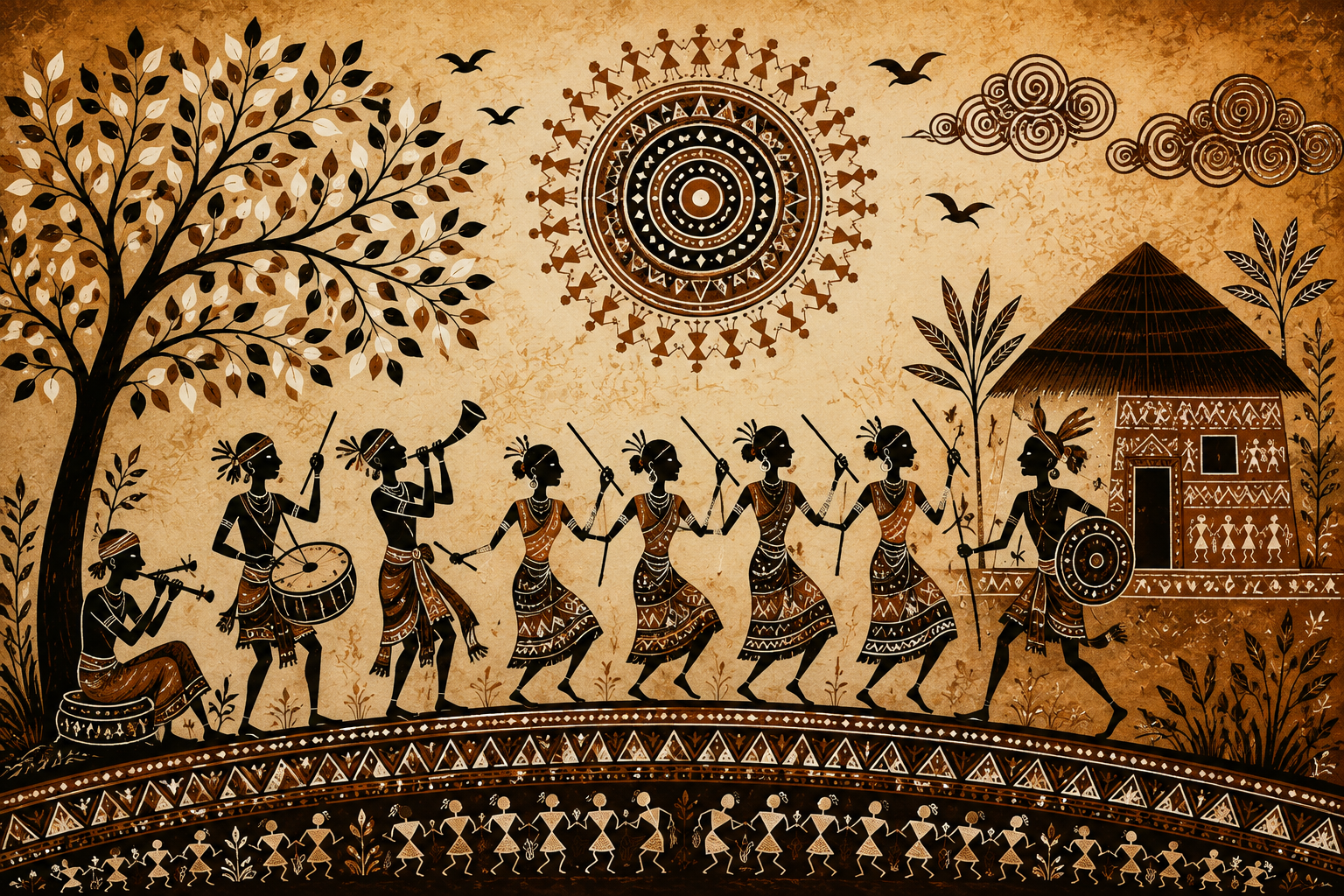
During the celebration, Pawari music, ghungroo sticks, traditional songs and group dances create a distinctive atmosphere. In some villages, the celebrations continue for several days, with the community coming together for rituals, prayers and a final gathering connected with the hills or sacred spaces.
Other traditional beliefs and celebrations in Nashik's tribal communities include reverence for Waghdev, Nagdev, Mavli and other nature- and village-associated deities. These traditions reflect the close relationship between tribal communities, nature and their local environment.
Maharashtra Tourism also highlights Nashik as one of the regions where visitors can experience Adivasi Nritya and tribal cultural programmes.
Tribal languages of India
Language is one of the most important parts of tribal identity.
Different tribal communities speak different languages and dialects, including Gondi, Santali, Bhili, Mundari, Ho, Khasi, Garo, Kokborok and Korku, among many others.
In Maharashtra, tribal linguistic traditions include Gondi, Bhili, Pawari, Korku and Kokni/Kokna, along with other local varieties.
These languages preserve traditional stories, songs, knowledge and community history. Protecting tribal languages therefore also means protecting cultural heritage.
Tribal culture and traditions
India's tribal heritage can be seen in many forms:
Art: Traditional paintings and handicrafts often represent nature, farming, animals and community life.
Dance and music: Tribal communities have distinctive dances, musical instruments and songs connected with festivals and important occasions.
Traditional knowledge: Generations of knowledge exist around forests, plants, agriculture, water and local ecosystems.
Food and lifestyle: Traditional foods often use locally grown crops and forest produce.
Festivals: Community festivals bring people together through music, dance, worship, food and traditional ceremonies.
Education, jobs and government schemes
Adivasi Din is also a good time to highlight opportunities available to Scheduled Tribe communities.
The Ministry of Tribal Affairs works for the development and welfare of Scheduled Tribes through programmes covering education, social security, livelihood and development.
Important areas of support include:
Scholarships and educational assistance
Eklavya Model Residential Schools (EMRS)
National Fellowship and Scholarship programmes
National Overseas Scholarship for ST students
Skill development and livelihood opportunities
Tribal entrepreneurship programmes
PM JANMAN and other tribal development initiatives
Students and job seekers from eligible ST communities should regularly check official government notifications for scholarships, recruitment, training and other opportunities.
Why preserving tribal languages and culture matters
Development and cultural preservation should move together.
Tribal languages, traditional art, folk music, stories and indigenous knowledge can disappear when they are not passed to younger generations. Supporting tribal artists, documenting languages, encouraging education and respecting traditional knowledge can help preserve this heritage.
At the same time, tribal communities need access to quality education, healthcare, employment, technology and economic opportunities.
True development means creating these opportunities without losing cultural identity.
Happy Adivasi Din 2026
On this World Tribal Day, let us celebrate the diversity, strength and heritage of India's tribal communities.
Happy Adivasi Din 2026!
May every tribal community continue to preserve its language, traditions, art and identity while gaining greater opportunities in education, employment, skills, entrepreneurship and development.
Let us respect the knowledge passed down through generations and work towards a future where culture and progress grow together.
Conclusion
Adivasi Din is not only a day for greetings and celebrations. It is a reminder of the incredible cultural diversity that exists across India.
From the Warli and Bhil communities of Maharashtra to the Gonds of central India, Santhals and Mundas of eastern India, and the diverse Indigenous communities of Northeast India, India's tribal heritage is vast and unique.
From the Pawari music and Dongrya Dev traditions of Nashik's tribal belt to India's many tribal languages, dances, art forms and festivals, these traditions are an important part of the country's cultural heritage.
9 August is a day to celebrate that diversity, respect tribal identity and support equal opportunities for the future.
Written by
Jayesh Gavit
IT Engineer & Content Creator, JGblogs
IT engineer with a passion for technology and building things. Started JGblogs in 2026 to share information and make government schemes, jobs, and career guides accessible to every Indian — free, in their own language.
About the author →Article